
• Honorary Doctorate conferred on noted filmmaker, poet and actor B. Narsing Rao
• Digital technology can help achieve social objectives: Prof. Ghanta Chakrapani
• Open Universities bringing comprehensive transformation in higher education: Former Director NAAC, Prof. V.S. Prasad
• Ph.D. degrees awarded to 23 research scholars and M.Phil degree to one scholar
• 38 Gold Medals presented
• Shri Ashritha receives three Gold Medals
• Rajahmundry Central Jail Inmate N. Suresh receives a Gold Medal and Book Prize
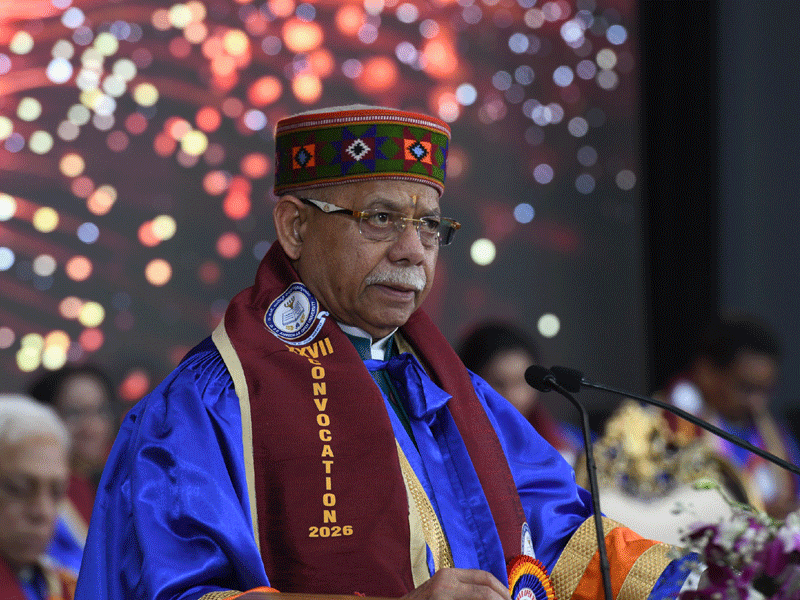
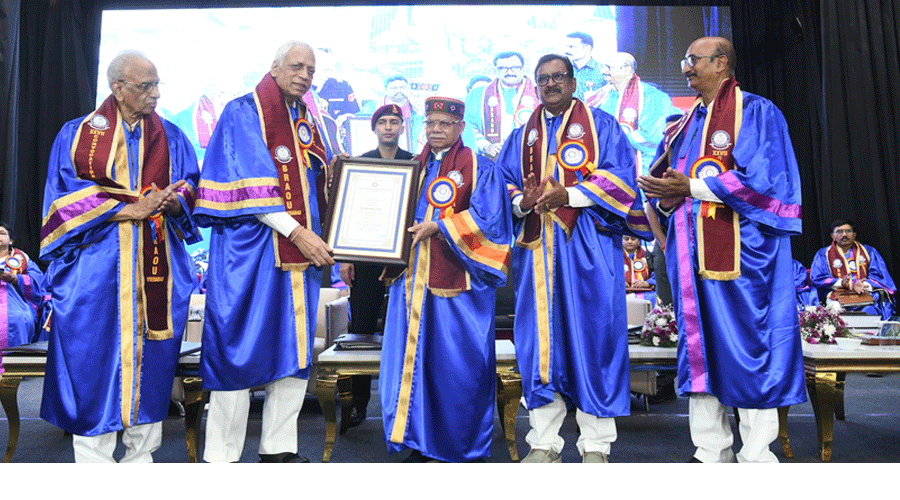
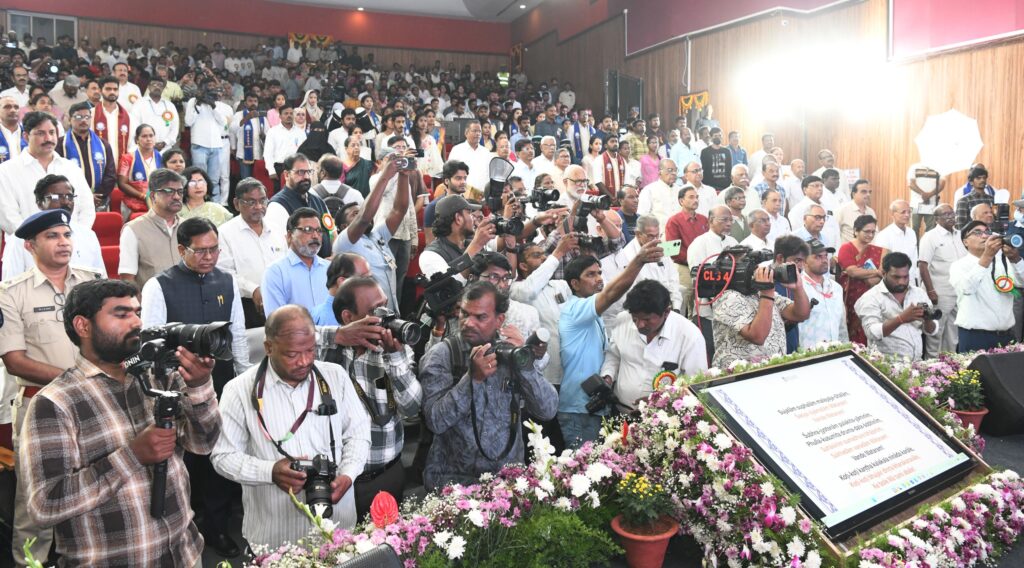
Hyderabad : Shiv Pratap Shukla, Governor of Telangana and Chancellor of Dr. B. R. Ambedkar Open University emphasised that higher educational institutions should focus on developing students’ skills and promoting digital education. Dr. B.R. Ambedkar Open University organised 27th Convocation at the University campus on Wednesday. The Governor conferred an Honorary Doctorate on noted filmmaker, poet and actor B. Narsing Rao, and also presented M.Phil and Ph.D. degrees, Gold Medals and Book Prizes to the students.
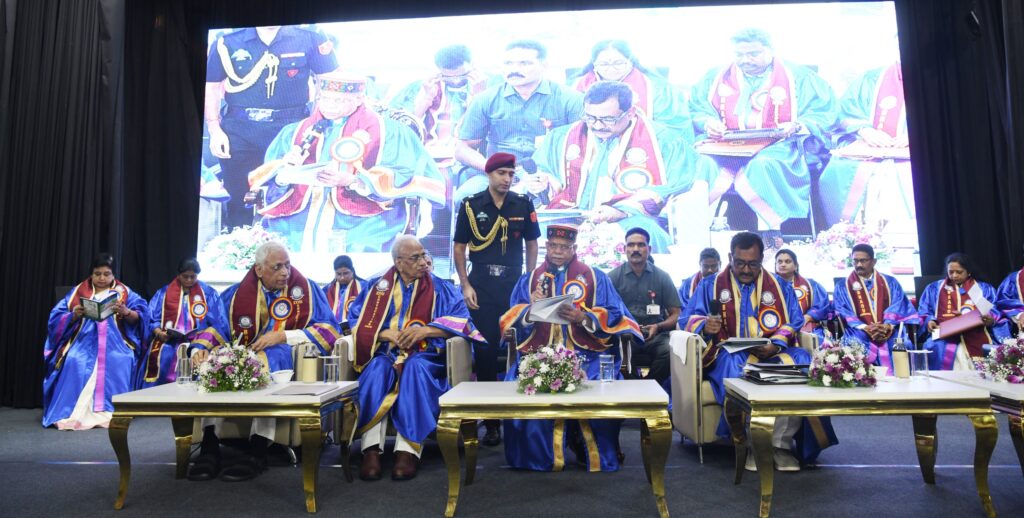
Governor Shiv Pratap Shukla appreciated the services rendered by Dr. B. R. Ambedkar Open University to students from rural, remote and disadvantaged communities and its efforts towards their advancement. He said that BRAOU was making a significant contribution to the expansion of higher education and improving the Gross Enrolment Ratio in higher education in the State. He stated that Dr. B. R. Ambedkar Open University had provided educational opportunities to more than 25 lakh students. He appreciated Vice-Chancellor Prof. Ghanta Chakrapani for introducing free education under the “Samatha” scheme for economically weaker sections, disadvantaged communities and tribal groups, describing the initiative as an inspiration to others. The Governor said the policies being implemented by BRAOU reflected the spirit of the National Education Policy (NEP) 2020. He noted that more than half of the graduates of the University are women and said this was in line with the spirit of “Beti Bachao, Beti Padao.”
He observed that when a woman in a family becomes educated, she contributes to taking the entire family towards development. Referring to the rapid technological and economic changes taking place across the world, the Governor said that Artificial Intelligence, Machine Learning, Robotics, Automation and digital technologies were transforming market requirements and creating new employment opportunities. He noted that Hyderabad was making rapid progress in the IT, life sciences and pharmaceutical sectors. He appreciated the University’s decision to prohibit the use of plastic on the campus as a measure towards environmental protection. He also called upon the youth to move towards a “Nasha Mukt Bharat” and become partners in the vision of Viksit Bharat. He urged everyone to work towards building a drug-free nation. The Governor emphasised the need to use technology to make education more accessible, flexible, engaging and learner-centric.
He said that Dr. B. R. Ambedkar Open University was moving beyond the traditional distance education system towards becoming a Digital University. Congratulating Shri B. Narsing Rao on receiving the Honorary Doctorate, Governor Shiv Pratap Shukla described him as an eminent filmmaker and appreciated his contribution towards bringing Telangana’s culture, people and social realities to wider national and international attention. Addressing the graduates, the Governor advised them to consider their degrees as the beginning of a new journey. He encouraged them to set goals, work with discipline, continue learning, adapt to changing circumstances and serve society. He said that the true measure of education was not merely personal success but the service rendered to society. He urged educated youth to contribute towards the goal of “Viksit Bharat – 2047.” The Governor congratulated the graduating students, Gold Medal winners, award recipients and their families.
Also Read-
DIGITAL EDUCATION TOWARDS SOCIAL OBJECTIVES: PROF. GHANTA CHAKRAPANI
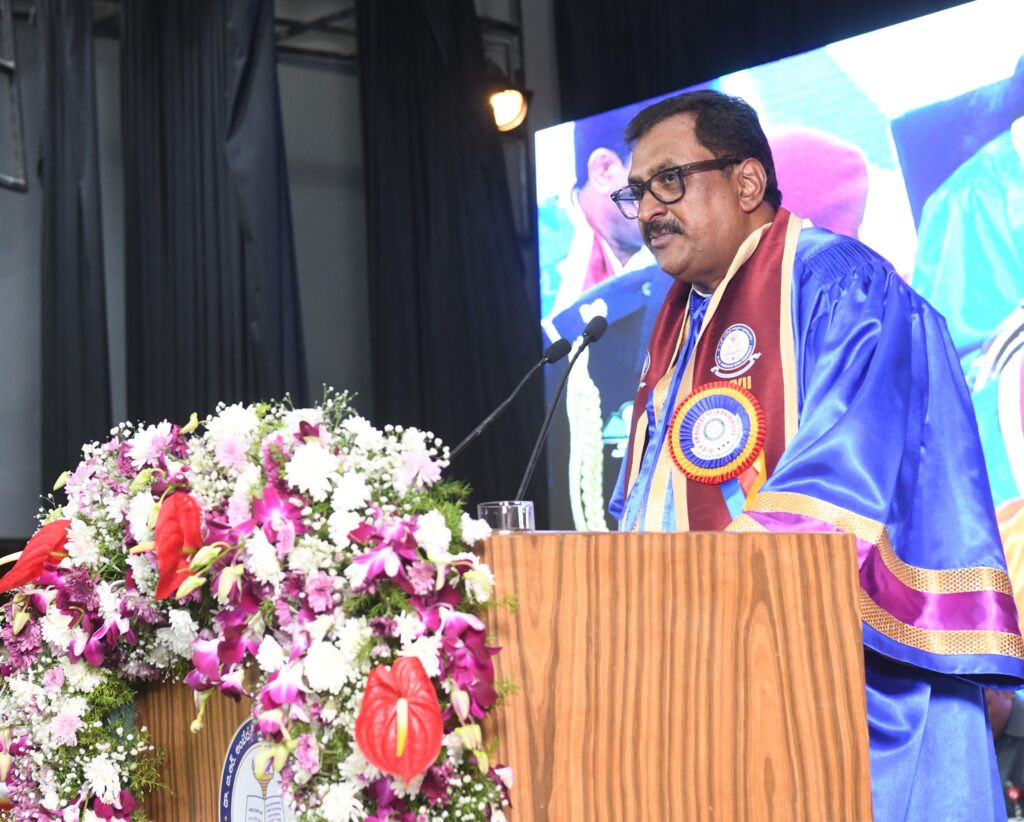
Prof. Ghanta Chakrapani, Vice-Chancellor BRAOU preside over the convocation, he said that the University was introducing educational programmes that combine the opportunities offered by digital technology with social objectives, providing inclusivity, quality and employment opportunities. The progress achieved during the past year had laid a strong foundation for the future. He stated that BRAOU was transforming itself into a comprehensive Open Digital University by integrating Bodhi, digital content, assessment, learner services and digital certifications. He said the University was strengthening its sustainable academic programmes while introducing new programmes in emerging fields. He explained that the University was providing opportunities such as skill development, internships and apprenticeships to enhance students’ employability.
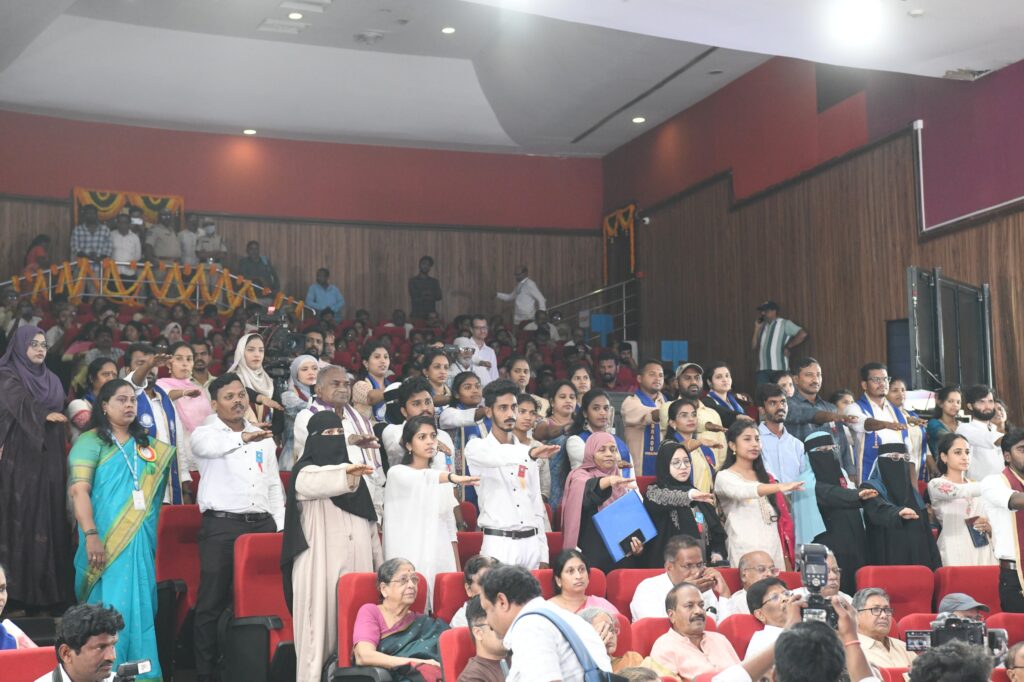
Prof. Ghanta Chakrapani stressed that digital transformation should not create a new digital divide. He said that University systems should be accessible to rural students, women, persons with disabilities, transgender students, tribal communities, defence families and other disadvantaged sections. He emphasised that expansion of education should always be accompanied by strong quality standards. He said that BRAOU was emerging as a strong centre for research in Open, Distance and Digital Education and was contributing knowledge to the wider field. The University’s partnership with the Commonwealth of Learning (COL) and its association with the Association of Asian Open Universities (AAOU) were providing opportunities for more active participation in global discussions on open and digital learning. He also said that the true measure of an open university was neither its buildings nor the number of degrees it awarded, but how many lives it improved. He said that for the past 45 years, the University had remained committed to its educational principles while moving forward by combining its social mission with the opportunities offered by digital technology. The University had expanded its academic programmes, strengthened online and ODL education, developed platforms such as Bodhi, established new partnerships, expanded international relations, and enhanced skill and employment-oriented programmes.
The University had introduced Artificial Intelligence in educational development, keeping equality and inclusivity at the centre of its mission, and had strengthened quality assurance mechanisms. He said that the University was establishing School Education Training and Language Training Centres. The Vice-Chancellor said that plans had been prepared to offer several educational programmes in alignment with the visions of Viksit Bharat and Telangana Rising 2047. Prof. Ghanta Chakrapani expressed his appreciation for the support extended by the Government of Telangana, UGC, NAAC, COL, CEMCA, PM-USHA, national and international educational partners, industry partners, alumni and other institutions. He also thanked the Executive Council, members of statutory bodies, Registrar, Directors, Deans, Heads of Departments, faculty members, officers, administrative staff, technical teams and other employees for their cooperation. He said that the progress of the University was the result of collective efforts.
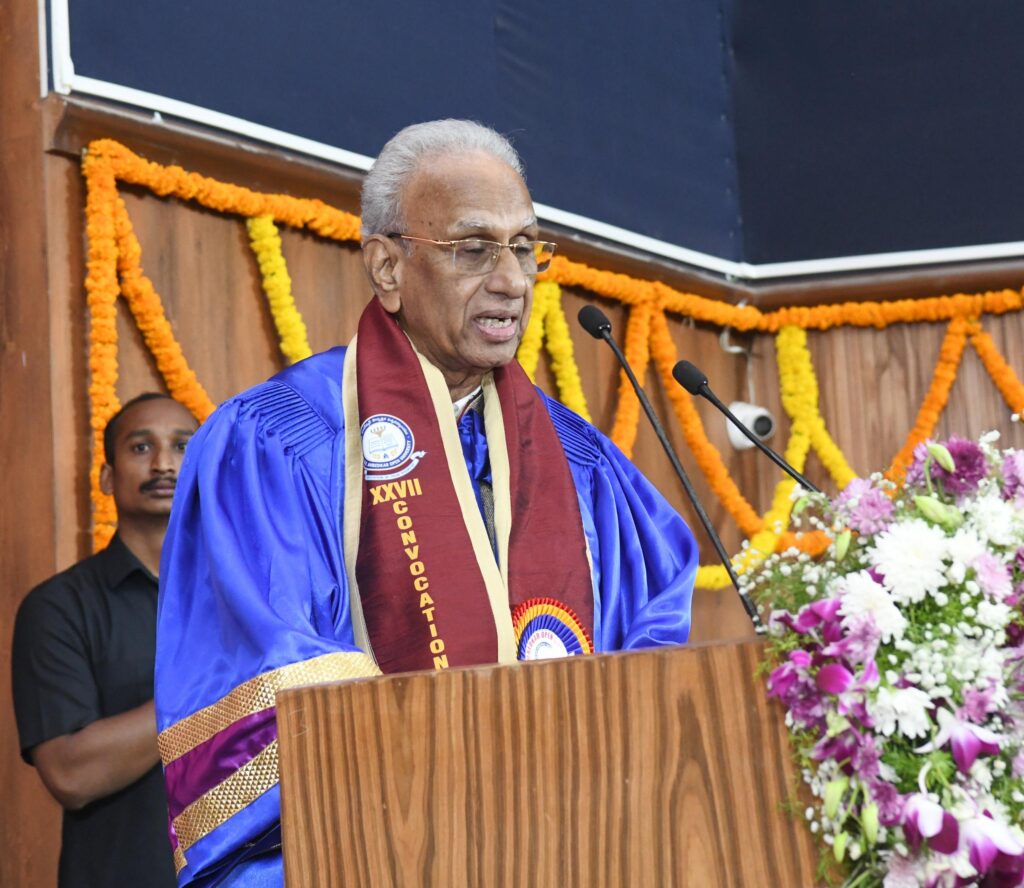
OPEN UNIVERSITIES BRINGING COMPREHENSIVE TRANSFORMATION IN HIGHER EDUCATION: PROF. V. S. PRASAD
Prof. V.S. Prasad, Former Director NAAC and former Vice-Chancellor, BRAOU attended as the Chief Guest and delivered the convocation address. He said that open universities had played a major role in making higher education accessible to people of all ages, from different regions and diverse social backgrounds. He said that when the open university system was introduced in India, it faced concerns regarding academic credibility and recognition. However, he noted that the open university system had made a significant contribution to the democratisation of higher education. He described the concept of bringing the university to the doorstep of learners as a distinctive feature of educational democratisation. He said that the ODL system had reduced the cost of higher education and that open universities across the country had introduced several programmes to enhance skills and knowledge.
Prof. Prasad said such efforts were important for building the human resources required for a developed and self-reliant India under the vision of Viksit Bharat @ 2047. He said open universities were working in accordance with the guidelines of NEP 2020 on multidisciplinary education to develop learners’ capabilities. Prof. Prasad expressed concern over the ethical issues arising from the increasing use of Artificial Intelligence (AI) in education. He suggested that AI should remain a tool for human development and should not become the master of human beings. He stressed that transparent operations and reliable examination systems were essential for maintaining credibility and gaining public trust. He called upon universities to shift from an “ego-centric” approach to achievements to a “social-centric” approach. Prof. Prasad appreciated Vice-Chancellor Prof. Ghanta Chakrapani for leading the University with a planned development model, focusing on digital infrastructure, innovative ODL and online programmes, development networking and the creative use of new technologies.
DEGREES, GOLD MEDALS AND AWARDS…
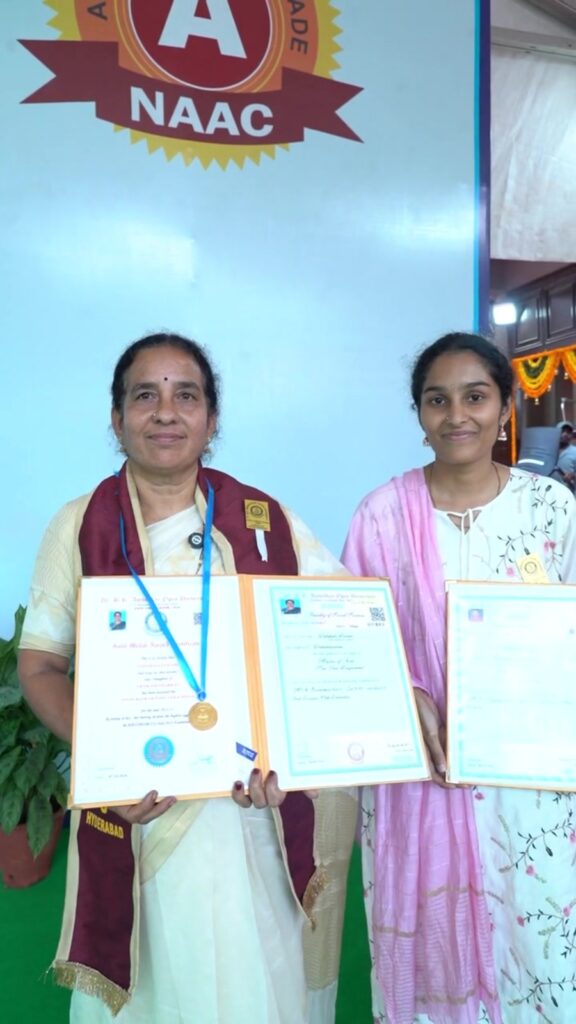
At the 27th Convocation, Ph.D. degrees were awarded to 23 research scholars and an M.Phil degree was awarded to one scholar. A total of 36,145 students were awarded degrees/certificates in various Degree, PG, Diploma and Certificate programmes at the Convocation. A total of 38 Gold Medals were presented—16 in the UG category and 22 in the PG category. Of the Gold Medal recipients, 29 were women and nine were men. In the UG category, 14 women and two men received Gold Medals, while in the PG category, 15 women and seven men received Gold Medals.
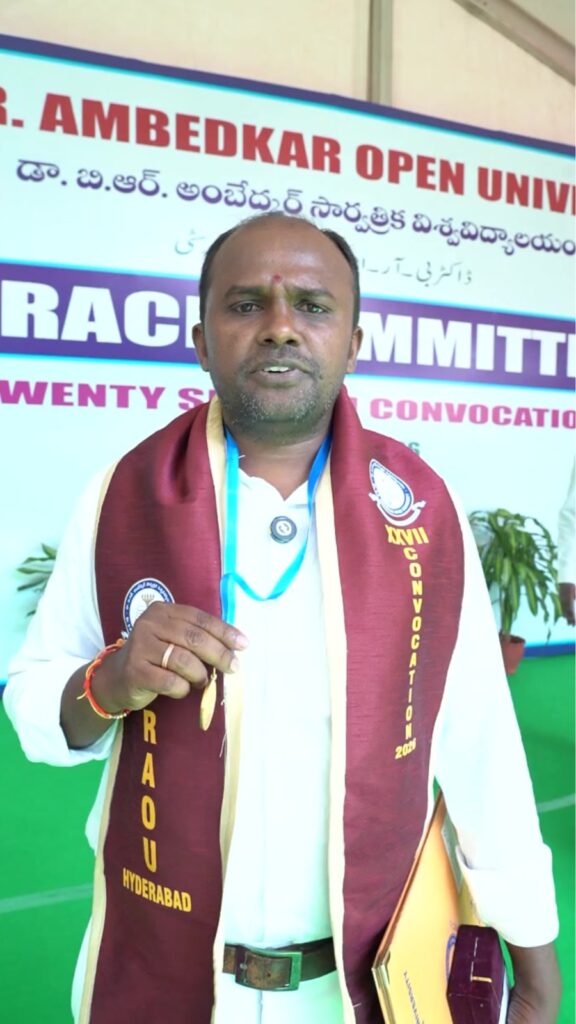
An inmate of Rajahmundry Central Jail, who secured the highest marks in all subjects, received a Gold Medal and Book Prize and emerged as a special attraction of the Convocation. As many as 27 inmates, including 26 male inmates and one female inmate from Cherlapally Central Jail, Rajahmundry Central Jail and Kadapa Central Jail, received their degrees. Among them, 12 were from UG programmes and 15 from PG programmes.
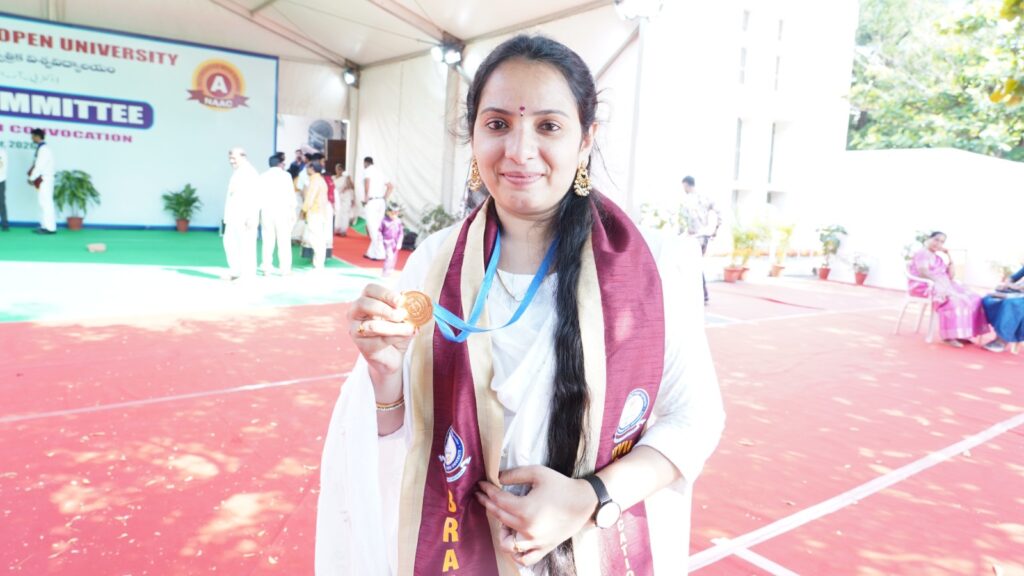
GOLD MEDAL WINNERS :
UG Programme: Bojjanapalli Shri Ashritha received three Gold Medals. Kadiyala Saibhanu, Hazeera Begum and Shiva Parvathi Chippala received two Gold Medals each. Nukapeyyi Suresh, an inmate, received one Gold Medal and a Book Prize. PG Programme: Manthena Sridevi and Thota Shwetha received two Gold Medals each.
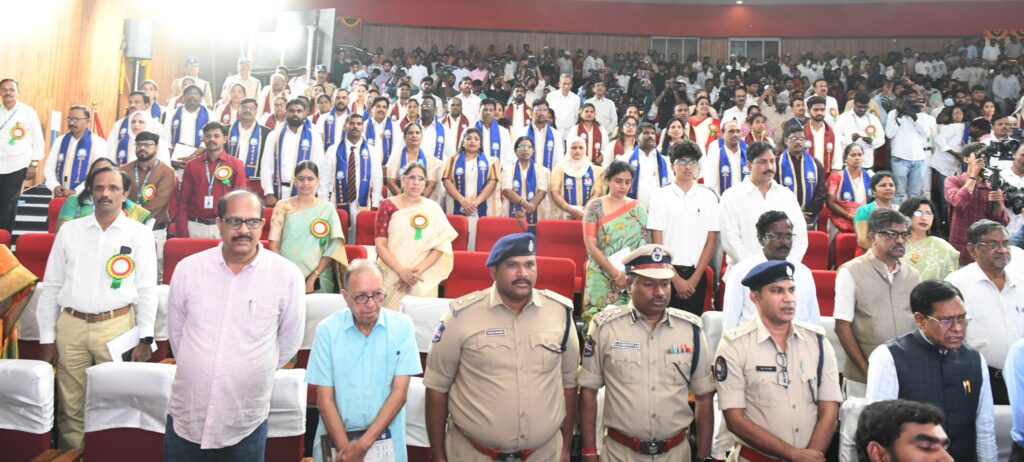
The programme was attended by Executive Council members Prof. V. Nityananda Rao, Bodhanapalli Venugopal Reddy and B. Venkateshwar Rao; Academic Director Prof. Pushpa Chakrapani; Registrar Dr. L. Vijaya Krishna Reddy; GRC-RD Director Prof. E. Sudharani; Deans Prof. Anand Pawar, Prof. Pallavi Kabde, Prof. Chandrakala and Prof. Rani Rajita Madhuri; Director, Student Services Dr. Y. Venkateshwarlu; EMRRC Director Prof. P. Venkata Ramana; COEL Director Prof. K. Sridevi; CIQA Director Prof. Rabindranath Solomon; Controller of Examinations Prof. G. Dayakar; Heads of Departments, Directors, a large number of students and employees, leaders of employee associations and others.


3 thoughts on “DR. B. R. AMBEDKAR OPEN UNIVERSITY SERVICES ARE COMMENDABLE : Governor Shiv Pratap Shukla”